


Assembly platform with T-slots
Contact Info
- Add:, Zip: 061000
- Contact: 谢佳宁
- Tel:15350773479
- Email:3622313939@qq.com
Other Products


Assembly platforms enable rapid assembly during machining processes
In the machining industry, assembly platforms serve as critical facilities for connecting various components and achieving product assembly. Their performance and efficiency directly impact the smooth operation of the entire production line and product quality. With the development of the manufacturing sector, requirements for assembly platforms have increasingly heightened, particularly in terms of assembly—how to complete assembly tasks has become a focal point for enterprises. This article delves into the assembly techniques of assembly platforms during machining processes, analyzing existing methods, challenges, and future development trends, aiming to provide valuable 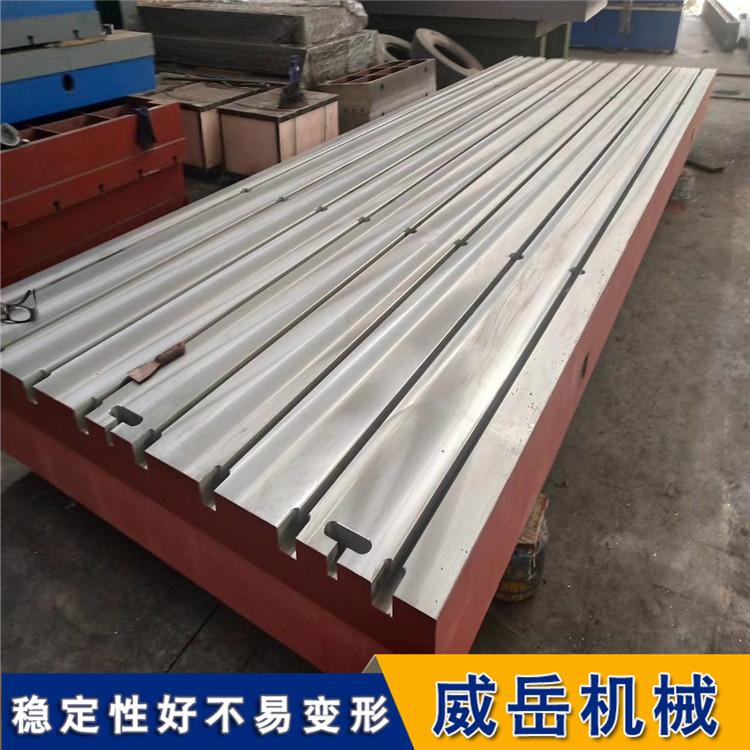 references for relevant practitioners.
I. Overview of Assembly Platforms
Assembly platforms, also known as tooling platforms or assembly tables, are fundamental facilities in machining workshops used for supporting, positioning, and assembling components. They are typically made of high-strength materials, such as steel or aluminum alloy, with surfaces specially treated to enhance wear resistance and anti-slip properties. Depending on usage requirements, assembly platforms can be designed as fixed or mobile types, some even equipped with leveling devices and clamps to ensure assembly precision.
II. Core Elements of Assembly Technology
2.1 Standardization and Modular Design
The prerequisite for assembly is the standardization and modular design of components. By breaking down complex products into several standardized modules, the assembly process can be greatly simplified, the variety of components reduced, and assembly efficiency improved. Moreover, modular design facilitates later maintenance and upgrades, lowering production costs.
2.2 Advanced Positioning and Clamping Technology
Clamping is key to assembly. Modern assembly platforms often employ high-precision positioning systems, such as laser rangefinders and optical aligners, to ensure accurate alignment between components. Simultaneously, the use of pneumatic, hydraulic, or electric clamping devices allows for rapid fixation of components, reducing manual operation time and enhancing assembly quality.
2.3 Application of Automation and Intelligent Technologies
With the maturation of automation technology, an increasing number of assembly platforms are integrating robots, automatic feeding systems, and smart sensors to automate the assembly process. This not only boosts assembly speed but also minimizes human errors, improving overall production efficiency. The application of intelligent technologies, such as machine vision and artificial intelligence algorithms, further enables assembly platforms to automatically adjust assembly strategies based on product characteristics, achieving flexible production.
III. Implementation Strategies for Assembly
3.1 Optimizing the Assembly Process
Review the existing assembly process to identify and eliminate bottleneck links. By introducing parallel operations, assembly line workflows, and other methods, reasonably plan the assembly sequence to reduce waiting time.
Weiyue Machinery, Ms. Xie 15350773479
| Industry Category | Others |
|---|---|
| Product Category | |
| Brand: | 河北威岳 |
| Spec: | 2000*4000 |
| Manufacturer: | 河北威岳机械 |
| Origin: | 111309 |


